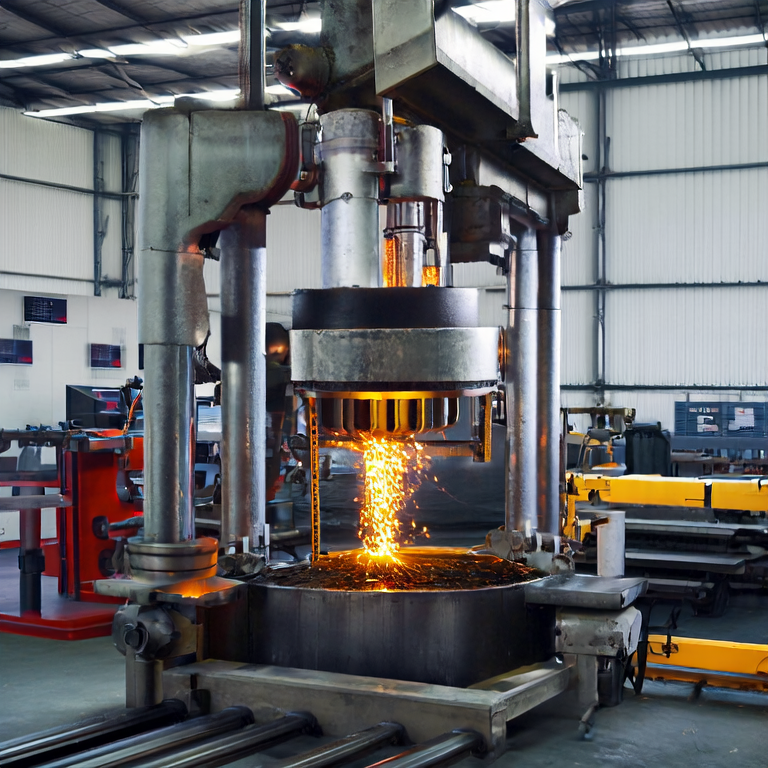
A forging press utilizes hydraulic or mechanical force to shape metal into desired forms. It provides consistent pressure which allows for precision work and intricate designs.
A power hammer uses a mechanical arm and a hammering mechanism to shape metal by striking it. It is proficient for bulk work and quick shaping but may not always achieve the finesse of a forging press.
| Parameter | Forging Press | Power Hammer |
|---|---|---|
| Force Application | Constant pressure | Impact strikes |
| Precision | High | Moderate |
| Speed of Operation | Slower | Faster |
| Energy Efficiency | More efficient | Less efficient |
Forging presses tend to have a stable performance and longer operational times due to their efficient design. In contrast, power hammers may require more frequent maintenance and adjustments due to the wear on striking components.
Forging presses operate smoothly with consistent pressure, which minimizes vibrations and promotes accuracy. Conversely, power hammers can introduce vibrations that may affect detailed work.
Forging presses are ideal for artisans specializing in detailed work and for those requiring high precision, such as jewelry makers and custom part manufacturers.
Power hammers suit blacksmiths and metalworkers focusing on bulk production or large metal projects where speed is prioritized over precision.
When determining whether a forging press is better than a power hammer, it is essential to consider the specific needs of your metalworking projects. At S-T Intelligence, we guide you in selecting the appropriate tool for your craft.
Excellent customer service is our highest priority. We are committed to providing our customers with the best service both before and after the order.