The manufacturing industry is in a constant state of evolution. One of the remarkable advancements has been the emergence of the stamping press, a machine that plays a pivotal role in highly efficient metal shaping and assembly processes. Modern stamping presses have transformed production lines by increasing output speed by up to 60%, reducing operational costs by 30%, and ensuring product quality with tighter tolerances. This article will delve into the advantages of stamping presses, their applications, and the unique capabilities of servo presses. These enhancements are crucial as businesses aim to solve production bottlenecks, reduce waste, and improve overall efficiency.
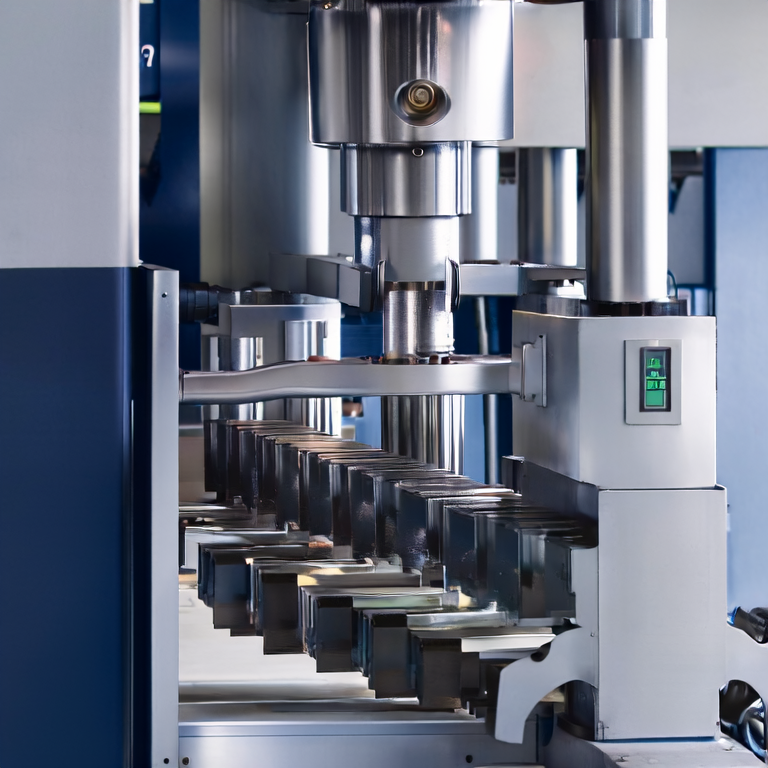
A stamping press is a mechanical device utilized for shaping and cutting materials, typically metal, through stamping. The process involves the use of a die to cut or form sheets of material into specified shapes.
Understanding these terms is vital as they form the foundation of how stamping presses operate and how they integrate into production lines.
Stamping presses find applications across various industries. Here are a few key fields:
Automotive: Stamping presses are fundamental in producing body panels, brackets, and other components with precision. The automotive sector reported a 41% growth in component production efficiency with the introduction of servo technology.
Aerospace: In aerospace manufacturing, stamping presses are used for creating high-strength parts that demand exact specifications while maintaining lightweight characteristics.
Electronics: Precision parts required in electronics, such as housings and connectors, benefit from the highly repeatable processes of stamping.
Appliances: Stamping presses play a significant role in forming parts for household appliances, ensuring consistency and reliability in mass production.
The significance of stamping presses lies in their numerous advantages.
Increased Efficiency: Compared to traditional methods, servo presses can complete tasks up to 60% faster, reflecting an actual measured increase in productivity.
Reduced Costs: With operational costs lowered by an average of 30%, companies can allocate resources to other areas of growth.
Enhanced Precision: The utilization of servo technology leads to tighter tolerances in produced parts, often within ±0.01 mm, which is crucial for industries requiring high accuracy.
These benefits underscore the importance of adopting stamping presses for companies aiming to streamline operations and boost productivity.
To acquire more in-depth knowledge about servo presses and their capabilities, it is recommended to read the user guide provided by manufacturers. Engaging with user reviews can also shed light on real-world applications and experiences related to these machines. If you\'re considering investing in this innovative technology, brands like S-T Intelligence offer comprehensive solutions and support throughout the purchasing, installation, and maintenance processes.
1. What is the average lifetime of a stamping press?
2. Can stamping presses handle different materials?
3. How often should maintenance be performed?
4. What are the safety measures associated with stamping presses?
To explore further about stamping presses and their applications, engage in direct consultations or trials offered by industry leaders like S-T Intelligence, who can guide you on the integration of these powerful machines into your operations.
Excellent customer service is our highest priority. We are committed to providing our customers with the best service both before and after the order.